 |
|
Astrophysical and Planetary Sciences Friday Seminar
Friday, December 06, 2024 at 12:15 pm JILA Foothills room Nicholas Scarsdale, UC Santa Cruz "Detection, JWST Study, and Atmospheric Modelling for Small Exoplanets: Diverse Approaches for a Diverse Population" 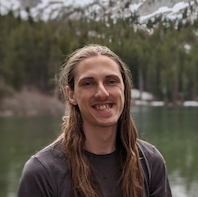 Abstract:The super-Earth and sub-Neptune exoplanets are the most common in our Galaxy within 1AU of their host star. While mass measurements have revealed a diversity of bulk densities, fundamental degeneracies between compositions obstruct identification of clear population characteristics, such as the water world hypothesis for sub-Neptunes. Atmospheric characterization, particularly with JWST, is the key to unlocking to true nature of the small planets. However, this work remains technically and theoretically challenging. In this talk, I will present results from my thesis work that approach this problem from three angles. First, I will share JWST observations from the COMPASS (Compositions Of Mini-Planet Atmospheres for Statistical Study; JWST Program #2512) survey, which is geared towards understanding the small planet population. Second, I will discuss my efforts to discover measure periods, radii, and masses for more exoplanets - especially at long periods - that are amenable to JWST characterization to provide a larger target list for JWST. Finally, I will discuss my work using general circulation models to search for the subtle fingerprints of planetary rotation on small planet transmission spectra. Taken together, these efforts represent progress on atmospheric characterization of small planets at all levels - a larger, more representative sample of targets; individual planetary studies with JWST; and forward modeling to predict population-level trends in a future database of high-SNR small planet spectra.
|